















What actually happens inside an electric vehicle when you press the accelerator?
Unlike a gasoline-powered vehicle, an EV does not need an internal combustion engine to convert fuel into mechanical energy. Instead, electrical energy stored in the high-voltage battery travels through a series of electrical and mechanical components before ultimately turning the wheels.
The basic energy path looks like this:
High-Voltage Battery → Inverter → Electric Motor → Reduction Gear & Differential → Wheels
But there is much more happening behind the scenes. The Battery Management System (BMS), power electronics, DC-to-DC converter, onboard charger, cooling system, and regenerative braking system all play important roles.
Understanding this energy flow is one of the easiest ways to understand how a modern electric vehicle works.
1. High-Voltage Battery: Where the Energy Starts
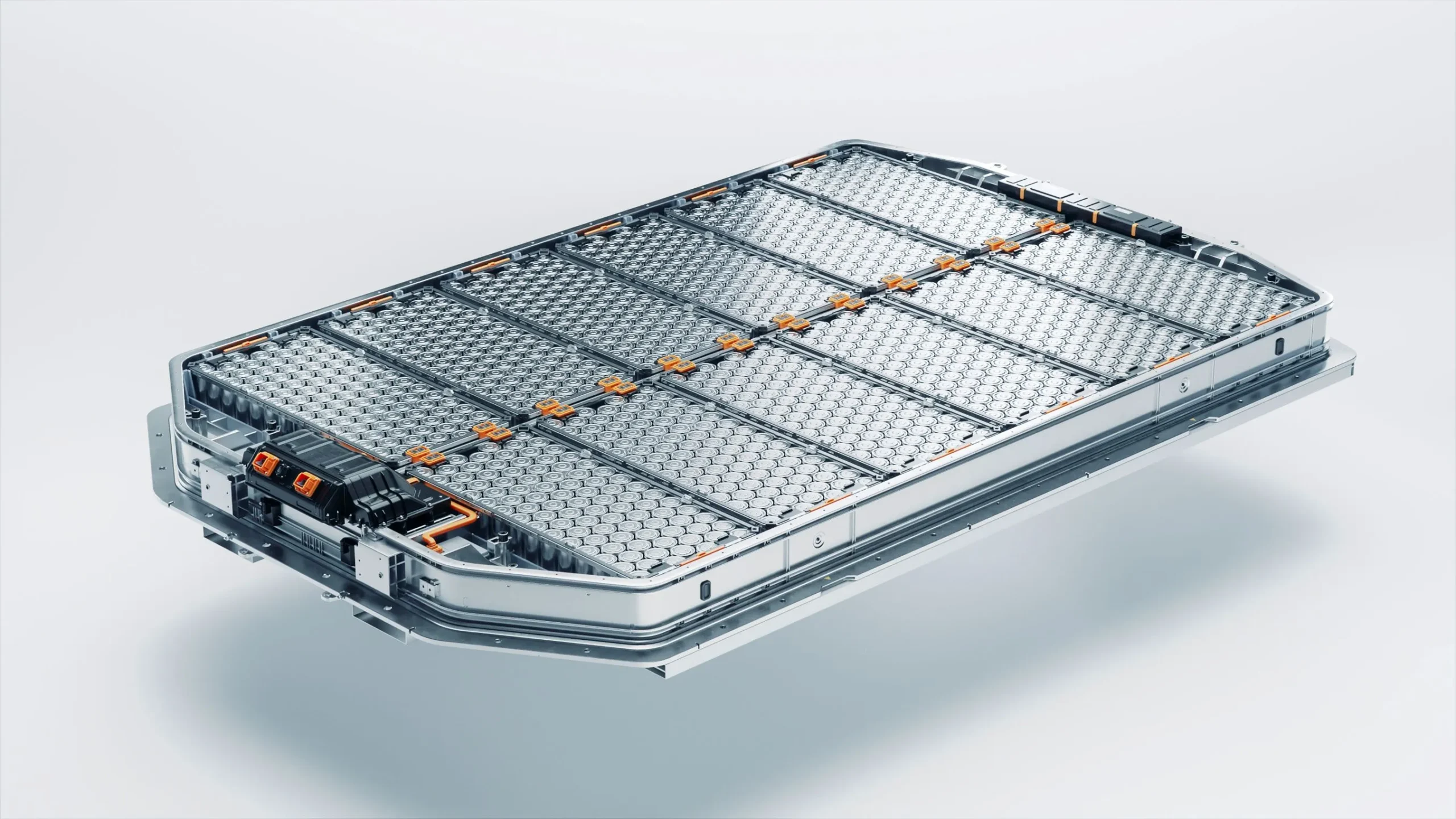
The high-voltage battery pack is the primary energy storage system of an electric vehicle.
Depending on the vehicle, an EV battery pack may contain hundreds or even thousands of individual battery cells arranged into modules or directly integrated into the battery pack.
The battery stores energy as direct current (DC) electricity. When the driver requests power by pressing the accelerator, energy from the battery is delivered to the vehicle’s power electronics and traction motor.
Battery packs operate at high voltages. Depending on the vehicle architecture, modern EV systems commonly operate in the hundreds of volts, with some newer vehicles using approximately 800-volt architectures.
However, the battery doesn’t simply provide unrestricted power whenever the accelerator is pressed. Its operation is continuously supervised by the Battery Management System (BMS).
2. The Battery Management System (BMS)
The BMS is one of the most important electronic systems inside an EV battery pack.
It continuously monitors important battery conditions such as:
- Individual cell or cell-group voltages
- Battery temperatures
- Pack current
- State of Charge (SOC)
- Battery health
- Cell imbalance
- High-voltage isolation and other safety conditions
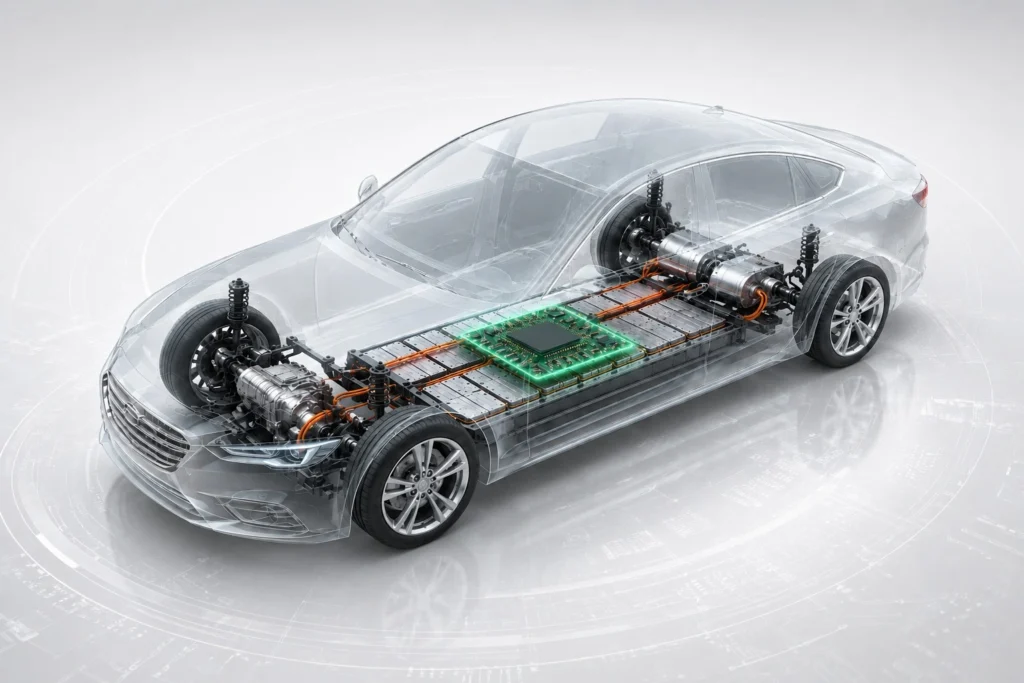
Using this information, the BMS helps determine how much power the battery can safely deliver or accept.
For example, if the battery is extremely cold, nearly fully charged, overheating, or experiencing a fault, the vehicle may limit acceleration or regenerative braking to protect the battery.
Before the high-voltage system becomes active, the vehicle also performs safety checks. High-voltage contactors connect the battery to the rest of the drivetrain when operating conditions are considered safe.
Many EVs also use a pre-charge circuit to gradually charge capacitors in the inverter and other high-voltage electronics before the main contactors fully connect the battery.
3. Inverter: Controlling Power for the Electric Motor
The high-voltage battery supplies DC electricity, but most modern EV traction motors operate using controlled AC power.
This is where the traction inverter comes in.
The inverter uses high-speed power electronics to convert the battery’s DC electricity into controlled AC electricity for the electric motor.
It does much more than simply convert DC to AC. By precisely controlling the electrical current supplied to the motor, the inverter helps control:
- Motor torque
- Motor speed
- Direction of rotation
- Acceleration
- Regenerative braking
When you press the accelerator, the vehicle’s control systems determine how much torque you are requesting. The inverter then controls the power delivered to the motor accordingly.
Modern EV inverters may use IGBTs, silicon MOSFETs, or increasingly silicon-carbide (SiC) power devices depending on the vehicle design.
4. Electric Motor: Electricity Becomes Mechanical Rotation
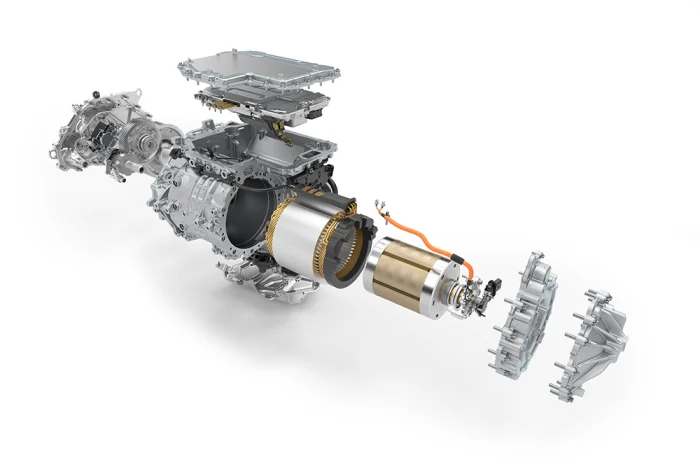
The traction motor is where electrical energy becomes mechanical energy.
The inverter supplies controlled electrical power to the motor, creating electromagnetic forces that cause the motor’s rotor to turn.
This rotating shaft produces the torque required to propel the vehicle.
One major advantage of electric motors is that they can produce substantial torque from very low speeds. This is one reason EVs can respond almost immediately when the accelerator is pressed.
Unlike a gasoline engine, an electric motor does not need to idle while the vehicle is stopped and does not require a traditional multi-speed transmission in most EV applications.
5. Reduction Gear and Differential
An EV motor can rotate at very high speeds—far faster than the wheels need to rotate.
Therefore, most electric vehicles use a single-speed reduction gear between the motor and the wheels.
The reduction gear decreases rotational speed while increasing usable torque at the wheels.
The differential then distributes torque to the drive wheels while allowing the left and right wheels to rotate at different speeds when the vehicle turns.
This drivetrain arrangement is generally much simpler than a conventional gasoline vehicle’s engine and multi-speed automatic transmission.
The energy journey during acceleration can therefore be summarized as:
Battery → Inverter → Motor → Reduction Gear → Differential → Wheels
6. What Happens When You Press the Accelerator?
All of these systems work together extremely quickly.
When the driver presses the accelerator:
1. The accelerator pedal sensor detects the driver’s torque request.
7. Regenerative Braking: Sending Energy Back to the Battery
One of the most interesting characteristics of an electric drivetrain is that energy can flow in both directions.
During acceleration:
Battery → Inverter → Motor → Wheels
During regenerative braking, part of that process reverses:
Wheels → Motor → Inverter → Battery
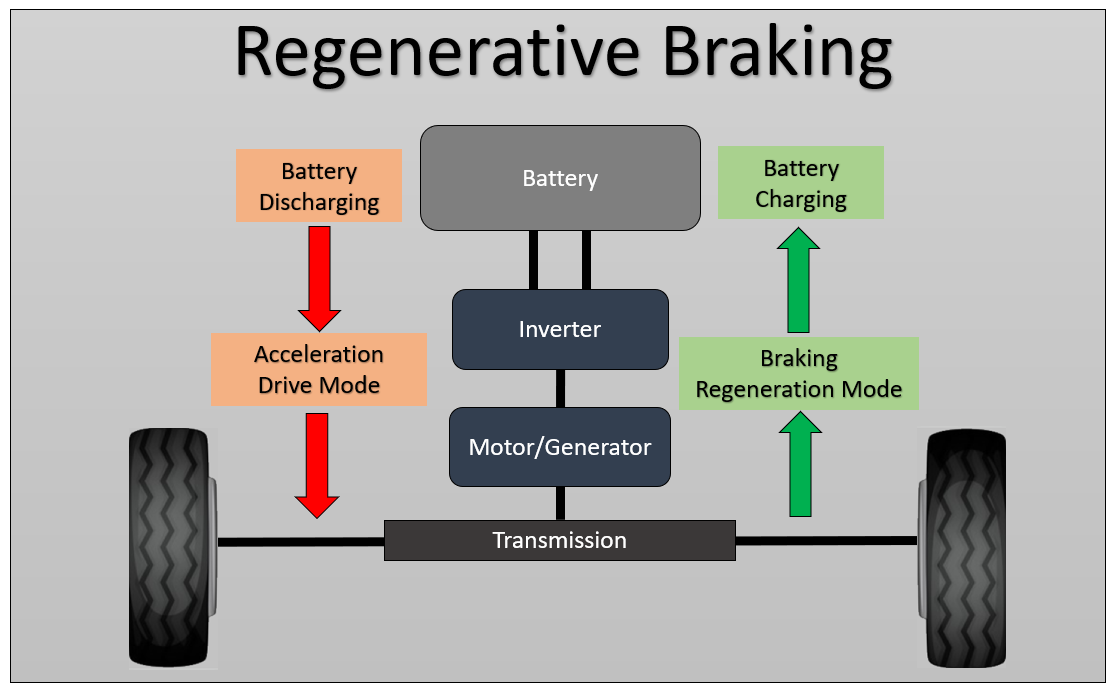
When the driver releases the accelerator or applies the brakes, depending on the vehicle, the traction motor can operate as a generator.
Instead of consuming electrical energy to produce rotation, the rotating wheels drive the motor and allow it to generate electrical energy.
The inverter manages this recovered energy and sends it back toward the high-voltage battery.
The BMS determines how much regenerative power the battery can safely accept.
Regenerative braking cannot recover all of the energy originally used to accelerate the vehicle because losses occur throughout the system. However, recovering some of the vehicle’s kinetic energy improves overall efficiency and can reduce the use of conventional friction brakes.
Regenerative braking may also be limited when the battery is nearly fully charged, very cold, too hot, or unable to safely accept high charging power.
8. The Onboard Charger: Charging the Battery From AC Power
When an EV is connected to an AC charging station, another important component comes into operation: the onboard charger (OBC).
The electrical grid supplies AC electricity, while the battery stores DC electricity.
The onboard charger therefore converts:
AC Electricity → DC Electricity → High-Voltage Battery
The onboard charger also communicates with other vehicle systems to control and monitor the charging process.
What About DC Fast Charging?
DC fast charging works differently.
A DC fast charger performs the major AC-to-DC conversion outside the vehicle and supplies high-voltage DC power to the vehicle.
Therefore, the vehicle’s onboard AC charger is generally bypassed during DC fast charging.
The battery and BMS still play critical roles in determining how much charging power the pack can safely accept.
9. DC-to-DC Converter: Powering the 12-Volt System
Even though an electric vehicle may have a 400V or 800V high-voltage battery, many of its conventional electrical components still operate from a low-voltage electrical system.
These can include lighting, control modules, infotainment systems, locks, pumps, computers, and other accessories.
Instead of relying on an alternator like a conventional gasoline vehicle, an EV uses a DC-to-DC converter.
It converts high-voltage DC from the traction battery into lower-voltage DC used to operate the vehicle’s low-voltage electrical system and maintain its low-voltage battery.
The basic energy path is:
High-Voltage Battery → DC-to-DC Converter → Low-Voltage System
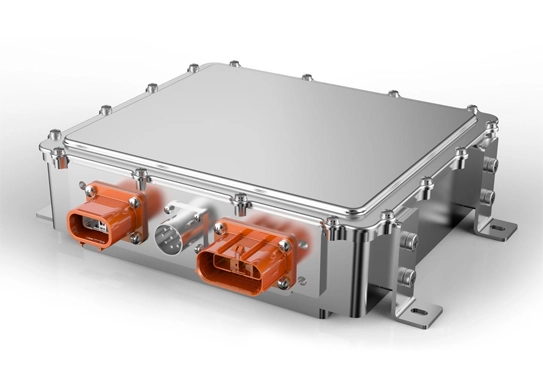
10. How All the EV Components Work Together
An electric vehicle is much more than a large battery connected to an electric motor.
The battery stores the energy. The BMS monitors and protects the battery. The inverter precisely controls electrical power. The traction motor converts electrical energy into mechanical rotation. The reduction gear and differential deliver that torque to the wheels.
During braking, the system can recover some kinetic energy and return it to the battery.
During AC charging, the onboard charger converts grid AC power into DC power suitable for the battery. Meanwhile, the DC-to-DC converter supplies the vehicle’s low-voltage electrical system.
Together, these systems create a drivetrain that can be highly efficient, responsive, and mechanically simpler than a conventional internal-combustion powertrain.
Understanding Your EV Battery and High-Voltage System
The high-voltage battery is at the center of virtually everything an electric vehicle does. Battery condition, cell balance, temperature, BMS operation, electrical isolation, cooling, and power electronics can all affect vehicle performance and reliability.
Understanding how energy travels from the battery to the wheels makes it much easier to understand why proper battery diagnostics are so important when an EV develops a high-voltage system fault.
A better understanding of these interconnected systems can also help EV owners recognize potential problems, understand diagnostic results, and make more informed decisions about battery maintenance and repair.